
Flexibility training considerations include
Avoiding movement compensation, matching individual foundation, adapting to training goals, and doing process protection. All the fancy requirements are an extension of these cores. You don’t need to memorize too many miscellaneous formulas. If you understand these, you will basically avoid stepping into big pits.
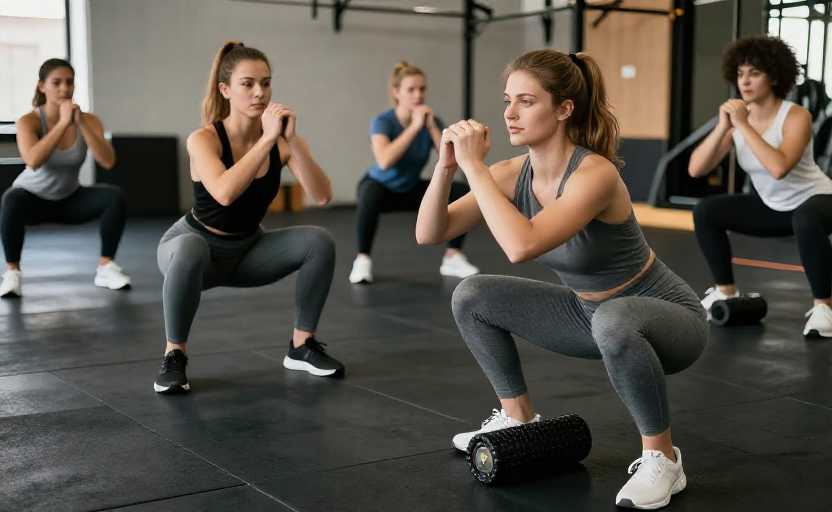
I met a girl before who followed an online tutorial to practice split horses. After half a month of practicing split horses, her waist hurt so much that she couldn't sit down. When she came to see me for evaluation, she discovered that every time she pressed her front leg, she arched her back to reach her toes. She didn't feel the stretch in her hamstring muscles, and her lumbar spine was pulled into a state of hyperflexion. Isn't this just useless exercise and hurting her body? Many people think that stretching has to "reach a certain position" to be effective. In fact, this is not the case at all. You must first ensure a neutral position, straighten your back when pressing your legs, and feel that the muscles to be stretched are tight and sore. If it hurts to the point that the muscles are unconsciously tightened or even can't help but tremble, then your body is sending an alarm. If you press harder, you will be unable to deal with it.
Oh, yes, when it comes to pain, there is actually a bit of controversy in the industry: The traditional static stretching school considers "a sense of stretch and no obvious pain" as the gold standard, but some specialized sports schools, such as gymnastics and Brazilian Jiu-Jitsu coaches, will allow students to endure a little bit within a controllable range. A slight sting. After all, the range of motion required by special sports is much greater than that of ordinary people. However, the premise is that there are professionals watching by and can judge whether you are experiencing normal stretching pain or pain about to be strained. If ordinary people practice at home, it is safest to stick to the standard of "no pain".
Don’t try to benchmark the actions of bloggers. Everyone’s foundation is very different. Don't just follow the dancers who can do the splits casually. They have been practicing for more than ten years since childhood. If you have been sitting in an office for ten years, your lumbar spine has become stiff. It's strange that it doesn't hurt your waist when you get up. I once took care of a marathon enthusiast. He always felt that his calves were too stiff at first. He followed the video and pulled his calves hard every day. After half a month of running, he tended to sprain his ankles. Later, I found out that the tightness in his calves was actually to stabilize the ankle joint. He had low arches and poor ankle joint stability. After excessively stretching the triceps calf muscles, the ankle joints shook even more when running, which made him prone to injury. You see, the same "stretching" is a good thing for others, but it may be a trap for you. Everyone's muscle status and joint conditions are different, so don't just copy other people's training plans.
There is also the point of adapting to training goals. Many people ignore it and think that the better the flexibility, the healthier. This is not the case at all. For example, if you practice weight lifting, it is not a good thing if the angle of dorsiflexion of the ankle joint is too large. When squatting heavy weight, the ankle will easily collapse forward, and the center of gravity cannot be stabilized, which may easily lead to injury. ; But if you practice rock climbing and your ankle dorsiflexion is off by 5 degrees, you may not be able to step on many small footholds. If you are just an ordinary fitness enthusiast and want to relax your stiff shoulders and back after sitting for a long time, then practicing dynamic stretching for 10 minutes each time is enough. There is no need to compete with your ligaments every day and have to do a straight line. It is really not necessary.
Oh, yes, there are some minor things to note. They are pitfalls that I have encountered after practicing for so many years. I would like to mention them to you: when stretching in winter, it is best to cover the area to be stretched. When the muscles are cold, they are like frozen rubber bands. They are easy to break when pulled hard.; For those with bad knees, don’t kneel directly on a hard yoga mat when pressing your hips. Use a thicker pillow or yoga brick, otherwise the synovial membrane will easily become inflamed due to wear and tear. ; Don't hold your breath when stretching. Many people hold their breath unconsciously when they exert force, especially middle-aged and elderly friends. Their blood pressure will rise immediately, which is too dangerous. Just breathe at a steady speed. If you can't stretch, you won't be able to stretch. You're not going to compete.
In fact, there are really not so many rigid rules in flexibility training. If you feel your body is stretched after the exercise and there is no pain or discomfort, then it is basically fine. If you are really not sure whether the movements are correct, spending a few hundred yuan to find a reliable coach to teach you twice is much better than trying to figure out the pitfalls for half a year on your own.
Disclaimer:
1. This article is sourced from the Internet. All content represents the author's personal views only and does not reflect the stance of this website. The author shall be solely responsible for the content.
2. Part of the content on this website is compiled from the Internet. This website shall not be liable for any civil disputes, administrative penalties, or other losses arising from improper reprinting or citation.
3. If there is any infringing content or inappropriate material, please contact us to remove it immediately. Contact us at:
