
Content requirements for specific sports skills
The core content requirements of special sports skills are essentially the dynamic unity of four dimensions: "no damage to basic movement patterns, adaptation of special skills to event rules, matching scenario requirements for tactical application, and supporting linkage between mental and physical fitness." There is no unified scale that applies to all events and all people. The final goal of all requirements is "the ability to stably achieve the participation goal of the event" - whether you want to do amateur fitness or compete professionally, as long as your skills match your goals, you are qualified.
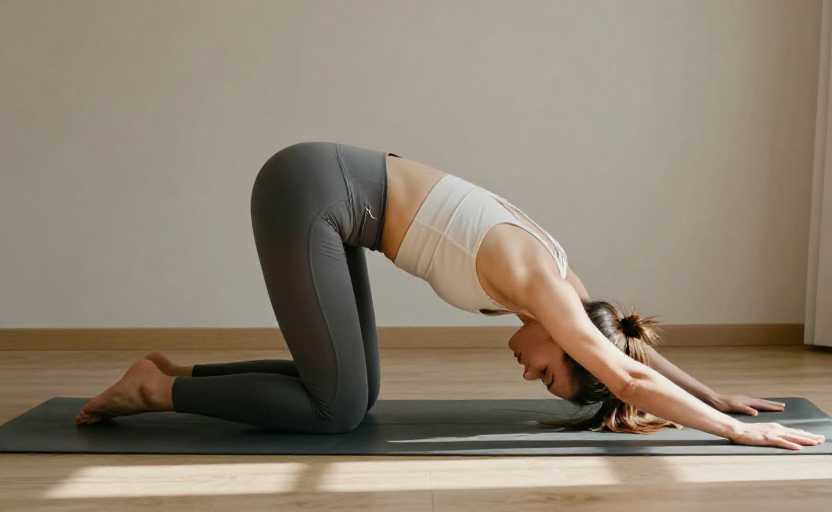
When many people first come into contact with sports, they always think that special skills are to "make movements standard." When I led a community youth basketball interest class two years ago, I encountered a child who usually practiced dribbling with his hips and behind his back. To put it bluntly, he was practicing "demonstration-level movements", not "competition-level special skills" - the first core requirement of special skills is that your movements cannot be floating in mid-air and must be implemented in the actual scene of the project.
When it comes to this, some people will definitely refute: If you don't practice standard movements, you just hit them randomly when you come up. What should you do if you practice incorrectly? This is actually a controversial point that has been quarreling for many years in the field of sports training. Each of the two schools has its own reasons. Most of the traditional professional team systems follow the "basics first" route. For example, those who practice sprinting first squat on barbells for three months to strengthen their lower limbs, and those who practice diving first practice tumbling movements on land for one month without touching the water. The core logic is to solidify the underlying kinetic chain first, and then add it later. It is not easy to deform when performing special skills, and it can also reduce the risk of injury. You see, before Su Bingtian changed his starting technique, he spent more than half a year to strengthen his core and ankle strength before he dared to adjust the details of his movements. If the foundation is not enough, hard modification of the technique will lead to injuries. But the current popular youth training system and amateur training logic in Europe supports the idea of "specialized embedding". For example, teaching children to play football is directly played in small fields starting from U6. All stopping and passing exercises are done with confrontation, and there is no such thing as two people standing alone. Their reasons are also very practical: if you stop the ball statically, you can stick the ball to the instep. A long, spinning ball flies over from the opposite side of the field. There are people squeezing you next to you, but you are still grounded. No matter how standard the movements you practice outside of special scenes are, it is useless. There is actually no right or wrong between these two ideas, but they are only suitable for different people: athletes who take the professional route must first lay a solid foundation if they want to hit the upper limit of performance. ; Ordinary enthusiasts just want to keep fit and have fun. They can start from special scenes and catch up on the basics while playing. There is no need to endure the basic movements for half a year before touching the ball.
Many people's requirements for special skills often only stay at the "technical" level. In fact, the linkage between mental and physical fitness is the key to widening the gap. I was chatting with the coach of the provincial archery team before, and he said that there is a good prospect in the team. He usually trains with 10 arrows to guarantee a minimum of 95 points, but misses the target in the first round of the official competition. It is not that he forgets the movements, but that his heart rate rushes to 140 when he is nervous on the court. He cannot even notice the slight shaking of his hands, and he cannot use the movement patterns he usually practices. That’s why professional teams now add “interference items” to their special training: someone is deliberately shouting your name next to you while you’re practicing shooting, you’re doing weight lifting immediately after running 800 meters, and you’re doing rock climbing deliberately to put pressure on you. The essence is to bind your skills to different physical and mental states. You can’t only make movements in a comfortable state. Only when you can perform stable output in high-pressure and exhausting scenes can you truly master special skills.
There is also an interesting misunderstanding. Many people always think that the movements of special skills must be "good-looking" and exactly the same as those in textbooks or professional athletes. I once had a friend who ran a marathon and insisted on learning Kipchoge's running posture. After changing it for half a month, my knees hurt. I went to see a rehabilitation doctor. They said that he had low arches and was originally suitable for running with small strides and high cadence. If he tried to imitate Kipchoge's long strides, the stress on his knees would triple. To put it bluntly, the requirement for specialized skills is never to be "the same as others", but to "adapt to your own physical conditions". As long as the movement pattern does not cause chronic injuries and can support you to complete your goals, even if the posture is not so good-looking, it is still qualified.
In the final analysis, the requirements for specific sports skills are never the standard answer on the paper. It is not a list of one, two, three and four that can be applied to everyone. Whether you are a professional athlete or an ordinary enthusiast, it is enough to slowly adjust during the practice process and find the rhythm that best suits you. It is enough to be able to steadily achieve your sports goals.
Disclaimer:
1. This article is sourced from the Internet. All content represents the author's personal views only and does not reflect the stance of this website. The author shall be solely responsible for the content.
2. Part of the content on this website is compiled from the Internet. This website shall not be liable for any civil disputes, administrative penalties, or other losses arising from improper reprinting or citation.
3. If there is any infringing content or inappropriate material, please contact us to remove it immediately. Contact us at:
